Ronnie's Notes
I recently read a book about four women who entered a cooking contest in World War II England. One of the contestants had met an Italian POW who told her about Italian cuisine (virtually unknown in England at the time) and taught her how to make chicken cacciatore.
The book was just okay but the recipes were fascinating, what with dealing with rationed food and all sorts of shortages. One woman used whale meat for her entree; the contestant who planned to make chicken cacciatore actually used rabbit.
In addition, I realized that it had been years, maybe more than a decade, since I cooked chicken cacciatore.
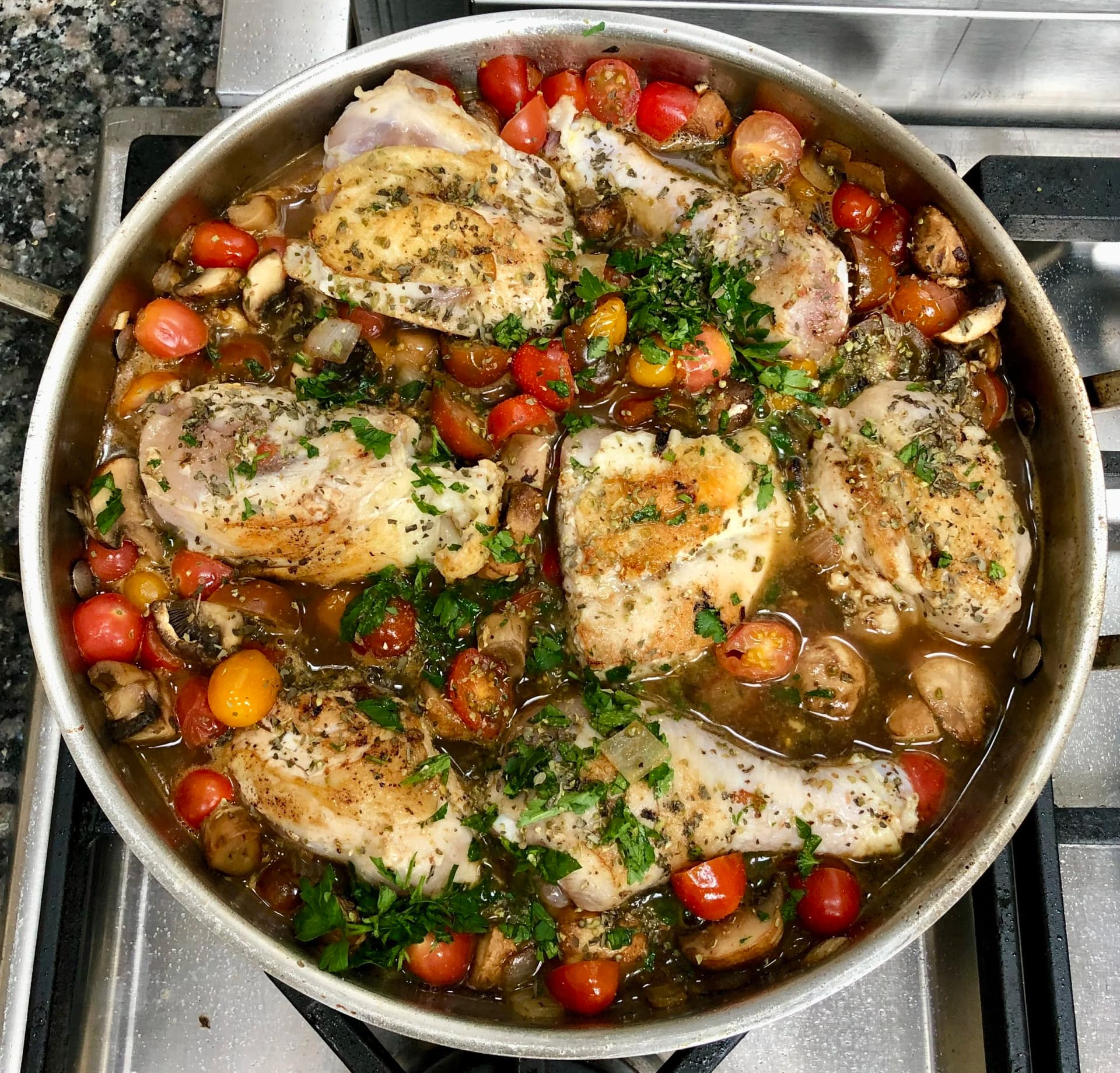
I got out my old recipe, and, like the wartime home cooks who learned to be flexible because ingredients were difficult to get, I made a few changes based on what I had at hand. I only had grape tomatoes; had fresh parsley but not fresh basil or oregano. I was minus a bell pepper (which we don’t love anyway), and whereas my original recipe called for red wine, I had a bottle of white open, so I used that instead.
The result was a complete success.
Here is the recipe with flexible ingredient options. Might be a nice change of pace for Shabbat chicken.
Instructions
cooked pasta, rice or polenta Coat the chicken pieces with some flour and sprinkle with salt and pepper.
Heat the olive oil in a large saute pan.
Cook the chicken pieces a few at a time for , turning them occasionally, until they are lightly crispy.
Remove the chicken pieces and set aside.
Add the remaining olive oil to the pan.
Add the onions and cook for .
Add the garlic, mushrooms, tomatoes and bell pepper, if used, and cook for until the vegetables are slightly softened.
Pour in the wine and stock.
Add the herbs.
Cover the pan, lower the heat and simmer the ingredients for or until the chicken is tender and cooked through.
Serve on top of cooked pasta, rice or polenta.